Materialism Without Matter: Gramsci Notes. 15 May 2020. By Jaime Rodríguez Matos.


1.-image


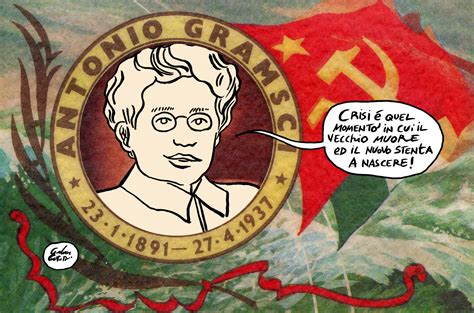
Antonio Gramsci was born in 1891.  He died in 1937—at the age of 46.  I am two years younger than that today as I write these notes on the first section of the Cambridge University Press edition of his Pre-Prison Writings.  That is to say, I will make comments on texts dating from 1914 to 1918, most of them newspaper notes, written when he was between the ages of 23 and 27.  (I finished my dissertation at the age of 29, disowned it, and worked for ten more years on the manuscript which became my first book, hoping no one ever deems it necessary to go back to anything I wrote before then.  So I do not wish to do to a young Gramsci anything I wouldn’t want visited upon myself.)  I want to note some issues or problems that I found worthy of further thought and investigation.  That is, even as I find myself in agreement with many of the criticism raised in the previous blog entries here, what I want to set down, at the moment, are the ways in which I would image a possible, though difficult, tarrying with Gramsci.


I want to suggest a different way of looking at Gramsci’s unabashed endorsement of Idealism in these pages.  In fact, I want to suggest that this is the closest Gramsci got to the existential analytic of dasein—from which he distanced himself, at least according to the general undersatanding of Gramsci today, but which might yet make way for an infrapolitical Gramsci.


Going back to Marx, this would be “to understand that adopting the standpoint of the proletarians in a state of ‘permanent’ insurrection resulted not so much in putting an end to idealism, but in installing the materialism/idealism dilemma—the perennial

question of their difference—at the very heart of the theory of the proletariat and its privileged historical role” (Balibar 27).  I don’t wish to insist on any subject’s privileged role, though.  Only on the idea that in terms of the existential analytic of dasein Idealism has at least one priority: “If what the term idealism amounts to an understanding of the fact that being is never be explicable by beings, but is always already the ‘transcendental’ for every entity, then the sole correct possibility of a philosophical problematic lies in idealism” (Heidegger 200).  In Gramsci this played out in a very specific way. Allow me a digression before I turn to a comment on something that informs my way of looking at the present situation.


In “Socialism and Culture” (1916), Novalis appears as a way to clarify the “supreme problem of culture:” “that of taking charge of one’s transcendental self, of being at the same time oneself and the self of oneself” (8).  In order to know others, we must first be capable of understanding ourselves perfectly, claims Novalis/Gramsci.  Giambattista Vico is adduced to give this notion, to know thyself, a political slant in a gloss on Solon’s maxim: “Vico maintains that, with this phrase, Solon intended to provoke the plebeians, who  believed themselves to be bestial in origin, while the nobles were of divine origin, to reflect on themselves and recognize themselves as  being of the same human nature as the nobles, and therefore to claim  to be made equal with them in civil rights.  And he then identifies this … as the basis and the historical reason for the rise of democracies in antiquity” (8-9; italics in original).  At issue here is “the scope and the principles of a true understanding of the conception of culture, and of culture in its relation to socialism” (9).  Culture is not encyclopedic knowledge—which Gramsci saw as harmful.  We are back to Spirit/History: “Culture is … the organization, the disciplining of one’s inner self; the mastery of one’s personality; the attainment of a higher awareness, through which we can come to understand our value and place within history…” (9-10).  All of this spiritual striving, however, is not anything “spontaneous” or “beyond the control of our wills” (10).  That would be nature, unchangeable, within the realm of “ineluctable laws” (10). But we are, on the contrary, creatures “of spirit”—which, in this context, means “a creation of history, rather than nature” (10).  Yet what can we make of all of this if there is no perfectibility, if there is no “sense” and order leading toward the final raid/revolution?  Let us take a step back.  The supreme problem of culture is for all of us to be able to discern that there is no difference between those who have a putative divine line of descent and those who are mere animals.  Rather than put the emphasis on the distinction human/animal, or gods/animals, I want to underscore the way in which the human-animal is here also the knot between a materiality of the spirit and an eventual void piercing through the available knowledge.  We are spiritual-historical creatures to the extent that we can inhabit that void in knowledge that is our ongoing transformation as spirit-history.  Critique is another name for this ability to inhabit that hole in knowledge.  For Gramsci, however, all of this is still moored to the political hopes of a more coherent, logical, ordered and perfect world: “To know oneself means to be oneself, to be master of oneself, to assert one’s own identity, to emerge from chaos and become an agent of order, but of one’s own order, one’s own disciplined dedication to an ideal” (11).  One must know the misery that others have created for us, in order to be able to replace it with a civilization of our own (11).  If for Gramsci history-spirit is a chain of events leading to our liberation of prejudice and idolatry (12), then “civilization” itself must not become either a prejudice or a form of idolatry.  What is the chain of historical-spiritual events if it is not a drive toward the ideal, toward a telos, toward a more perfect order?  I put forward the following: it is the presentation of an abyssal experience that we have systematically refused to face, in which the systematicity in question has been the various ways we have projected a desired order of things.  Words like destiny, order, god, life, and so many others, have organized our collective ways of projecting that there is something covering over the that void.


Gramsci’s sense of that abyssal experience is also palpable.  In “History” (1916) we find both the abyssal experience and the way that “life” is called upon to lessen the anxiety that experience produces.  “Give up to life your every action, your every ounce of faith,” writes Gramsci (13).  But even that can leave you with the sense that “something is missing”: “You are in the world, but you do not know why you are here. You act, but you do not know why. You are conscious of voids in your life; you desire some justification of your being, of your actions; and it seems to you that human reasons alone do not suffice” (13).  “You are,” he adds: “like a man looking at the sky, who, as he moves further and further back through the space which science has mapped out for us, finds ever greater difficulties in his fantastic wanderings in the infinite until, arriving at the void, and incapable of conceiving of this absolute void, he unconsciously populates it with  divine beings, with supernatural entities, to co-ordinate the vertiginous, and yet logical movement of the universe” (13-14).  According to Gramsci, these are inferior manifestations of the self, “purely instinctive, mere uncontrolled impulses,” and religion is the way that most seek to deal with them (14).  In stark contrast stands “the force of life itself” (14).  One must historicize and draw out the unfolding of religious impulses, for once one can trace a phenomenon back to its origin it will have been overcome: “To make them an object of history is to recognize their emptiness” (14).  But note the key operation in this passage: the void in question has shifted place from the sensation of arriving at a place where the ground is lacking (over which a religious answer is projected as a way to cover it) toward the emptiness of the religious answer itself.  It is history-spirit that will offer “the explanation to our existence” (14).  History-spirit cannot be supernatural.  However, this materialist understanding yields all too quickly to a different kind of faith: “revelation. If something still remains inexplicable, that is due only to our cognitive deficiencies, to the still imperfect grasp of our intellect” (14).  The whole is knowable, even if do not yet know all of it.  The past will be with us no longer as our shadow, but illuminating the way to a better future.  Gramsci is not shy about this secularization of religious categories: “Our religion becomes … history.  Our faith becomes … man, and man’s will and his capacity for action” (14).


What emerges is a fight against two different kinds of knowledge.  On the one hand the encyclopedia of all the fact that contribute to the permanence of the ruling class power; and, on the other, the knowledge that emerges once proper cognition of the historical process is gained.  One jumps over the abyss that opens in the dissolution of the first—which includes not just the narratives that legitimize a certain ruling structure, but also all of the metaphysical certainties that were the diving dictate from on high—to land on the certainties of a capacity for constructing the better world.  Between the first and the second form of history-spirit lies the recuperation of all that had been occluded in the past.  All is now light: “a past which illuminates” (14).  It is important to add that this kind of history is “the richer history which is not written in the history books” (30).  This illuminating past is “the bond of solidarity,” “the bond of shared humanity”—“the light which millions of Italians see by, … which illuminates the world for them…” (30).


On a different front, I would like to not that today it is impossible to read these texts without feeling their historical distance.  They are intimately involved in the context of WWI and the Russian Revolution, and they orient themselves therein in a way that is difficult to abide with today.  Gramsci makes clear some of the things that would be unconscionable for us to assume today.  Consider the tangled web of consequences derived from the class struggle.  For us, it has become ever clearer that “the class in power” will never “assume its responsibilities,” will never “carry its premises through to their logical conclusions,” will never “submit to an examination of the way in which it has been preparing for the … present miserable state” (5).  But for Gramsci, such a reckoning was also the only way to restore “the dualism of the classes” (5).  That is, only in the recognition of this failure would the dualism of the classes become clear.  No one today would even imagine to make such a demand of the ruling class in earnest.  The ruling class today simply ploughs through with the construction of its narrative.  It accepts responsibility for naught.  Thus, today, we believe neither in destiny nor in dualisms.  Given Gramsci’s presuppositions, this would make it difficult to sustain a belief in “the passage of civilization from an imperfect form to a more perfect one” (5).  This is also our inability to believe in progress.  But I leave it at that.


Balibar, Étienne. The Philosophy of Marx. Trans. Chris Turner. London; New York: Verso, 2007.

Gramsci, Antonio. Pre-Prison Writings. Trans. Virginia Cox. Ed. Richard Bellamy. Cambridge; New York: Cambridge University Press, 1994.

Heidegger, Martin. Being and Time. 1927. Trans. Joan Stambaugh. Albany: State University of New York, 2010.


An epoch unmoved (II). by Gerardo Muñoz


The possibility to be ‘moved’ against the pitch of “malafede” solicits another symbolization. A “new founding” of the world for an opening of a destiny. In his beautiful The true life (2017), an essay for boys and girls, Alain Badiou writes that: “A thinking of departure, a true thinking of the ever-changing ocean of the world…an exact thinking because it is a nomadic one, a maritime thinking. May everyone be able to say: “I have seen the earth parceled out in vast spaces and my thought is not heedless of the navigator” (49).

Given the obvious maritime metaphor, it is evident that Badiou is suggesting that true life is only possible outside the party of cybernetics (kubernetics) and its half-sister ally, the party of hegemony. This plea for ‘exactitude’ is irreducible to what “I ought to do”; it is on the side of “how I do what I do” in a world disjointed from the whole. To exist outside the whole means that I cut through things. It also means that I have only one life.

The problem of what I am calling the epoch ‘unmoved’ raises the question of the genesis of the species. This is why the lives of boys and girls become crucial. The destruction of the time of youth (an unproductive time, not just a biological stage) announces the corruptio optimi of a world without experience. The world becomes only survival. I take this to be the vortex of the film The Killing of a sacred deer (Dir. Lanthimos, 2017). On the surface a rendition of the tragic legislation of Agamemnon, but more esoterically perhaps a commentary on the loss of inclination in world integrated into value and reproduction of life.

It is no coincidence that the two poles of contemporary life help frame the film: the correctional suburban life of order and civilized legibility (the end of community), on the one hand; and the practice of a surgeon (whose profession is to save “lives”), on the other. These two poles of world administration – the economic (oikonomia) pole and the medical pole (“human life”) – is the mechanism by which the world is reduced to a place, and experience to communication. Hence, when the tragic irrupts “normal time” of life, there is no more decision possible. Rather, there is only exchange, equilibrium, and ius talionis. The Killing of a sacred deer circumvents the nihilism of the epoch precisely in this way: there is no way out, so like Pacman we must go on.

Except for a sequence (into the 20:00-25:00 mins) where the fatherless Martin is sitting with the girls in the room, and they talk cigarettes, and looks, and armpit hair and music. Everything is purposely inconsequential, but this chatter is the only true void of every encounter. Then, they go out for a walk. A clear path meanders the two bodies with no purpose. Pasear is the activity that leads nowhere. Isn’t this what Badiou called a “thought that is not heedless of the navigator”? But how long could it last? In the film, not very much. As confirmed in the last sequence, ius talionis puts everything back in order and the child becomes future-time; an act of magic that has Reality as its theater.


*Imagen: “Lette versato” (2018), de Mónica Ferrando.


Notes on Gramsci’s Pre-Prison Writings, 1-100

61vMT6P+QLL

Of biological organisms, bourgeois citizens, and ethical comrades

I found a lot to be scared about in these first 100 pages—as I’m sure others will have. The insistence on the organic character of social life, the biological metaphors about the communal body, the aggregating molecules escaping bourgeois society to form higher-level compounds, and so on and so forth, these are all metaphors worth thinking about, especially in these years, especially after identity politics has become a norm, and especially after the symmetrical backlash that politics has generated—the politics we, or rather people with a stronger stomach than mine, endure every day at 6:00 pm. We may discuss these scary metaphors, but I am not sure we would find a lot to say—I am not sure *I*, at least would find much to say beyond marveling at I once deemed necessary to fight them, at how I thought urgent to reject the hold they seemed to exert.

Of cocaine, moral fiber, and redemption

I find Gramsci’s reflection on cocaine more interesting—perhaps, because they may offer an alternative path through the organicist bric-à-brac that avoids falling off the cliffs of nostalgic reminiscences marking little more than age. There are two passages I have in mind, both from p. 71. Gramsci is commenting about the drug users in Turin and Bologna who will walk free since cocaine consumption is not a crime. They’ll walk away as they should, innocent as they are of actions that are the necessary consequence of bourgeois society, he claims:

“It is quite natural that this kind of putrid scum will be produced: people without ends, without morals, without history. […] Pure animality, the pleasures of the senses, the mechanical action of nerve and muscle. […] I am amazed that so *few* slip down the slope of destructive pleasures.”

The explicit dualism underwriting this statement is remarkable in itself, even though it is not completely clear at which level it is pitched. Ontological, à la Kojève? Or is it purely axiological, à la Kant? But perhaps even more interesting is that last phrase, “destructive pleasures.” (I wish I could find the Italian, btw, but this piece is not included in the publicly available selection of his writings). It is easy to let your eyes skim over a trite clause used and abused when talking of drugs. But let us think about it for a second. Are the pleasures destructive because it is cocaine that triggers them, or are they destructive because they are pleasant? It seems pretty obvious to me that the latter interpretation is much better, otherwise the previous line about pure animality would make no sense. And what is the remedy to these dangerous pleasures whose looming destruction should have felled many more than it did?

“Work is the only thing that confers moral impulses: it is the crucible in which the spiritual essences that can give a meaning to our lives are volatized” [1]

Really, Antonio? I would be tempted to gloss. Really, in 1918, right at the end of the most destructive war in the history of Europe, right in the middle of famine, poverty, and overall sorrow you are extolling redemption through work? Would not have been more courageous, more daring, more in tune with the spirit of the times whose necessary path we are claiming to follow to praise pleasure against work? Shouldn’t the revolution abolish work—and not just meaningless work, but work altogether, as even Marx claimed? (Not always and not very consistently, to tell the truth, but he still claimed it). Should not that be the promise, the great ideal that wold override the petty details of the misguided utopian thinkers?

What if the road across the swamp of the organic society would only go through pleasure—the pleasure of the senses and the mechanical action of nerves and muscle,” as it were? What if it is cocaine that may redeem us from work?

That is a question I think we will want to discuss, or at least keep in mind throughout this Gramscian journey we just started.

[1] The translation here makes little sense and the crucible metaphor, as written, goes obviously against Gramsci’s meaning. I think he must have written something like “l’essenza spirituale si cristallizza” o “si distilla.” It certainly does not evaporate…

On Taming and Domestication: Notes on Gramsci pre-prison writings pp.3-100 (By Maddalena Cerrato)

IMG_0466Just a few notes around three main interconnected points:


  • THE HISTORICAL CONJUNCTURE: WWI and Russian Revolution (1914-1919).

These pages are unquestionably marked by the particular historical conjecture to which they belong. Each article presents itself as a piece responding to a particular occasion, and pays its special tribute to its kairos. Yet, each time it seems as though Gramsci’s most urgent concern is taming the historical juncture in order to bring it back (in the form of exception) within the necessary movement of the supreme reason governing History. What called my attention is the fact the both the two main events that constitute the overarching kairos for many of (if not all) the interventions, that is, WWI and The Russian Revolution, appear in these pages mostly as (related )exceptions to that historical rationality of which the Italian proletariat should become aware in order to be able to accomplish its destiny of establishing a new order.

War is the origin of the chaos as is disrupts the “long process of intense critical activity, of new cultural insight and the spread of ideas”(10) that should proceed every revolution. War is what disrupts “the normal course of events,” i.e. “when events are repeated with a certain rhythm. When history is developing through a series of moments, each more complex than the last and richer in meaning and value, but nonetheless similar”(41). “War has modified the conditions of the normal environment for historical action, giving an importance to men’s collective will which it would not have under normal conditions” (45). Under these new conditions that the war brought about – which changed the face of the system of production-, the Russian Revolution is a necessary and welcomed historical anomaly. The Russian Revolution is a revolution against Karl Marx’s Capital (39), but “the revolutionaries will themselves create the conditions needed to realize their ideal fully and completely… in far less time than it would have taken a capitalist system” (42).

  • COLLECTIVE WILL  -> IDEA and CULTURE -PROPAGANDA-EDUCATION-DISCIPLINE:

Gramsci’s uneasiness with the anomaly of the war (so in a sense also with the Russian Revolution) seems to have to do with Gramsci’s “cultural” and educational concerns that frame his account for the collective revolutionary will. If on the one hand, the occurrences that exceed the normal course of events give an importance to men’s collective will which it would not have under normal conditions, need to be understood as exception to the order of things – which means that they also confirm the historical necessity and rationality of the normal course of events. On the other hand, in the normal course of events, men’s collective will needs to be raised and domesticated into a consensus to serve such an historical necessity.  Here, it’s where Gramsci’s particular understanding culture emerges as inherently entangled with discipline, propaganda, organization, and voluntary submission.

“Culture is quite different. It is the organization, the disciplining of one’s inner self; the mastery of one’s personality; the attainment of a higher awareness, through which we can come to understand our value and place within history,  our proper function in life, our rights and duties.”(9)

Culture so understood makes sure that the universal idea (Socialism) becomes the programmatic ideal around which a new social organism can unite and emerge as a well-developed self-aware historical subject. The socialist ideal (concrete universal) is the unifying factor that enables the establishment of those affective ties that constitute the collective will of the nation and enables it to become a fully developed historical subject acting through the consciousness of its universal aim. The creation and transformation of the multiplicity of individuals into a social organism that will be the agent of the new order implies “a long term task of educating and mentally priming its members” (37) to “guarantee the kind of immediate, effective, deep-rooted consensus which provide a solid foundations for action”(37). Only through this process of grass-root education:

“Man is coming to know himself, to know how much his individual will can be worth and how powerful it can become, if by bowing to necessity, by disciplining himself to obey necessity, it can come to dominate necessity itself, by identifying necessity with its own ends. Who is it who really know himself? Not man in. general, but the man the submits to the yoke of necessity.” (56)

“Will in a Marxist sense, means consciousness of ends”(57).

  • ORDER -> NATION-CLASS-STATE-PARTY SUTURE:

Finally, in these pages, Gramsci comes across as having settled the problematic National Question that dominated the Marxist debate at the beginning of the century.  The Historical dialectical necessity aims to the establishment of a higher order, that is the concrete universal of socialism. And such an order emerges as depending on the suture Nation-Class-State enacted through the party which is “a State in potential, which is gradually maturing.” The party “depends on the international only for its ultimate aim, and for the essential nature of its struggle, as struggle between classes” (4), but its immediate task is rather national. The party’s specific function and responsibility is to lead the nation to the its self-awareness… so to bring the “millions of individuals scattered throughout Italian territory, each leading his own life, each rooted in his own soil, knowing nothing of Italy…”(28) to form a social and political unity.

The constitution of the nation as collective will around the idea and the program of socialism is the task and the fulfillment of the party universal potential to become the State organizing the superior order that overcomes the chaos of capitalism and bourgeois competition.

Preliminary Reflections on Antonio Gramsci’s Pre-Prison Writings (p. 0-100) – Michael Portal

Preliminary Reflections on Antonio Gramsci’s Pre-Prison Writings (p. 0-100) – Michael Portal

Here are my preliminary thoughts and notes on the first 100 pages of Antonio Gramsci’s Pre-Prison Writings. My ignorance (in general, and of Gramsci in particular) means that I have, at the moment, little to contribute to our discussions. Still, I found the reading interesting and exciting – and I eagerly look forward to reading the reflections of others and learning from everyone in the coming days and months.

In my reading, I was struck by how Gramsci addressed the historical. Humanity, Gramsci suggests, is nothing but its history: “Man is primarily a creature of spirit – that is, a creation of history, rather than nature” (10). Elsewhere: “But society, like man himself, always remains an irreducible historical and ideal entity, which develops by continually contradicting itself and surpassing itself” (48). History exists to illuminate the world (we learn who we are as historical beings through our projects within history), but history does not predetermine our world: it is “a past which illuminates and does not overshadow us” (14).

Potentially in tension with this line, however, is Gramsci’s observation that we are intimately involved in crafting history (“History is a product of humanity”) and that history “is not a question of evolution, but of substitution of one thing for another: something which can only be done by a self-conscious and disciplined use of force” (78). For this, the Russian Revolution is exemplary: Russia is “where history is” because, in part, “the Russian Revolution had paid its dues to History” (95).

In the Italian context, as Gramsci hopes to demonstrate, history (or History?) means something particular. “Italian history,” he writes, is clearly distinct from “the history written in the history books” (30). Instead, “the greater, the richer history” remains unwritten and is present as a special “bond of solidarity” between the Italian people. Are these bonds contingent or eternal? Are they a “concrete universal”? (25)

What is interesting (or important) about these thoughts on history is how they allow us to rethink utopias and utopianism. For Gramsci, utopias are not ‘unreal’ in the traditional sense. Instead, they lack a history (they have “no foundation”) because they are founded “on an infinity of details, rather than a single moral principle” (20). History “in the true sense of the word” evades writing, of being restricted to some endless list of details (55). Merely recording information, producing encyclopedias, is not sufficient: “one will not be writing history” (56). Instead, we can (and must?) think of history as an event “entirely composed of practical activity (economic and moral).”

The turn towards practical activity might shed light on the supposed tension I isolated above – between our being both the products and producers of history. Practical activity, living daily life, sits bizarrely in historical writing. It does not contain high drama; it won’t sell books. But it is all that we have and are. Political mobility should, accordingly, be based on this (and our) reality.

Notas de seminario sobre el pensamiento de Emanuele Coccia (V). por Gerardo Muñoz

Seguimos con la cosmología de Coccia (entradas anteriores aquí: I, II, III, IV). Rodrigo lee un fragmento donde el filósofo dice que “lo más profundo son los astros”. Esta excentricidad complejiza el problema del sol. En efecto, ya no podemos hablar de “heliocentrismo”, sino de otro tipo de irradiación. Lo importante es que la mirada hacia los astros hace que el estar en la tierra sea siempre ex terram. Aquí hay una clara distancia con respeto al horizonte schmittiano. Le recuerdo al curso que el primer texto de Carl Schmitt fue un ensayo sobre la Aurora boreal de Theodor Däubler, el poeta expresionista católico tan caro para el arcano del jurista. Allí Schmitt le dará divisa poética al nomos de la tierra, tal y como luego haría con Konrad Weiß con el sentido escatológico de la historia. Hablar de un sentido telúrico, por lo tanto, se vincula a una reducción del sentido de mundo a la matriz del territorio. Aquí podemos tener una interesante discusión con el pensador político Hugo Herrera, quien ha desarrollado una interpretación sobre la crisis chilena como problema del territorio y del paisaje. La mirada excéntrica de la planta se ubica en a la atopia entre tierra y cielo.

Gonzalo Díaz Letelier hace una vinculación importante entre heliotropismo ex terram y la concepción de un universo sin centro. Aquí es reaparece Blanqui con La eternidad a través de los astros (1872). Para Blanqui la luz de los cuerpos cósmicos (estrellas, cometas, lunas, planetas) es una luz manchada. Por ejemplo, dice Blanqui: “…contemplar el teatro de sus grandes revoluciones, bajo el aspecto de una luz pálida, mezclada con puntos más luminosos. La luz es solo una mancha, por eso esta mancha es un pueblo de globos que resucitan…la materia no llegaría a disminuir ni a crecer ni en un átomo. Las estrellas solo son antorchas efímeras. Entonces, una vez apagadas, sino se vuelve a alumbrar, la noche y la muerte, en un tiempo dado, se hacen cargo del universo” (28-29). Si alguna vez se ha hablado dos herencias agambeneanas – una de derechas y otra de izquierdas – podemos decir que el blanquismo cosmológico es su zona de indeterminación.

Pero Blanqui afirma abiertamente el problema de la muerte astral. El universo está siempre lleno de “antorchas efímeras” porque para los astros “la noche es larga en la tumba” (28). En realidad, Coccia habla muy poco o casi nada de la muerte. Esto va al centro de su apuesta panteísta. Si todo es “vida”, entonces olvidamos la sombra que acecha como “afuera de la vida en la vida”, tal y como sugiere el pensador Mårten Björk. Si todo es “vida” entonces la maquinación biopolítica es fuerza absoluta de esa energía. Desde luego, el “todo es vida” de Coccia no es un vitalismo integrado a la comunidad humana. Por eso Coccia se distancia de la tradición de pensadores de la inmanencia como Gilles Deleuze o Michel Henry. Y, sin embargo, lo que sí podemos decir es que no hay cabida para una teogonía trágica en el mundo sensible de los medios. Como remarcó Gonzalo: no hay una retirada a lo Empédocles.

Como sabia Hölderlin, Empédocles era el representante de lo sacrificial de la irreductibilidad aórgica; mientras que para Coccia es trazado no es nunca trágico, sino más bien próximo al paradigma espinosista de la felicidad. El problema sigue siendo si, esa felicidad, después de la génesis moderna, mantiene o no un trazo de sombra negra que es ser-para-la-muerte. Incluso, con Blanqui podemos decir que la muerte no es un “acontecimiento” terrenal, sino también cósmico. Pensemos en el momento actual de nuestra civilización: ¿no es la muerte lo que se busca escamotear bajos diversos dispositivos de encantamiento? El encantamiento del afuera es el lujo. Pero ese lujo puede ser cegador si no encuentra una zona de sombras.

Aquí hay que ir muy lentamente. El encantamiento ex terram no puede ser “absoluto”, sino refractario. Pero en lo refractario afirmo “mis condiciones de verdad”, y es desde ahí que se produce un encuentro con las cosas del mundo. Hay que ver con mil ojos, decía Stevens. Pero solo para no ver mil cosas. Pero tengo para mi que lo importante se trata de establecer un corte entre el paisaje y mi experiencia. Incluso una deriva con lo no-vivido de la experiencia que es la muerte. Y no cualquier muerte: un pajarito muere, muere una flor y una planta, pero en el momento en que la muerte se singulariza como algo irreductible, entonces ya podemos hablar de un archê del entierro como trazo invertido del ser. De la misma manera que amamos aquellas cosas que hemos atravesado, no podemos decir que amamos a todo lo que muere. El amor depende del fantasma y no de la energía solar.

José Miguel Burgos Mazas abrió un punto de inflexión importante cuando dijo que justo aquí reaparece la teología. ¡Finalmente me concede algo! Claro, cierto tipo de teología – no la teología oficial de la Iglesia y de los curas y los sacerdotes – vinculada al afuera de la metafísica del sacrificio y del pastoreo de la persona. Hölderlin le llamó a esto la posibilidad de una “Iglesia invisible”, que era ya extra ecclasiam. El paso de Empédocles a los himnos pindáricos indica esta salida a lo abierto del paisaje como teología transfigurada y transfigurante. O sea, ya no hay dependencia de la “genealidad” del poeta como líder. En este sentido, el paso de la edad de los poetas a la poesis del mundo sigue siendo una transición inter-epocal importante. La poesis nos abre a naturaleza de la caducidad de las cosas.

Es cierto que, como sugirió Rodrigo Karmy, el problema de la biopolítica moderna es que instala el paradigma sacrificial del régimen de vida al punto de dejar fuera a la muerte como ‘accidente’. Que una época como la nuestra la muerte sean estadísticas o acumulación de cuerpos en un frigorífico da la medida de que la biopolítica, incluso en su mejor versión “positiva”, es siempre tanatopolítica. Una biopolítica de la muerte que es, en cada caso, expropiación de la muerte y nunca celebración. Como sabía el teólogo Iván Illich, esta distancia entre vida y muerte es lo que se viene abajo con la administración de mysterium iniquitatis de la Iglesia como control impositivo sobre las almas y la caridad. Rodrigo dice: la ausencia de “almas personales” es lo que el tomismo nunca le perdonará al averroísmo. La muerte se organiza como una oikonomia orientada a preservar una comunidad de salvación encarnada.

Quedaría pensar, con y más allá de Coccia, lo que en otro lugar el mismo Rodrigo ha llamado una apertura de “excarnación”, que para mi ya no sería “política”, sino del otro lado de la política, más allá de la vida y de la economía: la existencia en el mundo. Este pudiera ser un buen momento para un “paso atrás” y reconsiderar, contra toda reducción biopolítica, el bios orphikos, que antecede a la polis. El bios orphikos: el viaje como encuentro entre los vivos y los muertos; la posibilidad de una teología transfigurada desde el afuera de la civilización. Un afuera al que ya no hay que imaginar como un submundo, sino que está entre nosotros, en un zaguán o en una fiesta, o como en la bruma de Santa Mónica, en el umbral entre el paisaje y la piel.


*Imagen: Paisaje en Route 1, California, abril de 2018. Fotografía de mi colección personal. 

Notas de seminario sobre el pensamiento de Emanuele Coccia (IV). por Gerardo Muñoz

Cuarta sesión sobre el pensamiento Emanuele Coccia (las anteriores puede consultarse aquí: I, II, III). Rodrigo Karmy lee un fragmento de su ensayo sobre el “atravesamiento” en La vida de las plantas (2016) para indicar que las plantas han sido un “impensado” en la filosofía. La planta sería el depositario de una “comunicación medial” cuyo mundo se da mediante una “fuerza física” que atraviesa a todas las cosas. Ya desde aquí estamos ante la rehabilitación del hyle, mens, deus panteísta de David de Dinant. El atravesamiento recorre y desplaza la problemática del hombre-animal reactivando la cuestión del mundo como problema del “afuera”. En este sentido, Coccia no es un pensador civilizatorio, sino, en cada caso, de lo que se escapa de la reducción de la civilización. Y, sin embargo, las plantas son una entidad nutritiva del sol. Aquí aparece todo el tinglado de la metafórica de la luz y del proyecto copernicano que abre la pregunta por la “génesis” misma de la modernidad como “época definitiva”.

¿Hasta qué punto Coccia no es un pensador moderno? Esto es, en un sentido estricto, ¿un pensador de la modernidad o de una modernidad transfigurada? Una afirmación en esta dirección aparece explícita en el nuevo ensayo sobre Van Gogh titulado Le Semeur – De la nature contemporaine (2020) [א]. Sabemos que Hans Blumenberg puso todo el peso de la fisura del cosmos moderno en el acontecimiento copernicano. Una vez más la dicotomía mundo-cosmos reaparece en el centro de la escena. Rodrigo recuerda que en el libro El imperio científico (2017) de Fernando Beresñak, el problema de la revolución copernicana no queda aislada de la institucionalización de la Iglesia como matriz antropológica. Y, sin embargo, quedaría por ver si el “instancia copernicana” de Coccia es igual al Copérnico de la legitimidad de la “ontología matemática”, o si, más bien, se trata de un movimiento anárquico que libera energía. Cuando digo energía digo luz, y luz es fuerza física. Pero ¿esto sigue siendo filosofia? Aquí aparece Spinoza y el problema de la inmanencia. Sobre esto volveremos después.

Ángel Octavio Álvarez Solís lanzó una distinción importante: luz no es lo mismo que sol. Cuando Coccia dice que los atributos de Dios ahora están en la naturaleza (physis), de alguna manera está poniendo de cabeza la tesis de la secularización “moderna”. La energía del sol sería el cuidado de todas las cosas, y no objetivación de las cosas como entes disponibles para la producción (¿aunque sí para el cultivo?). Esta inversión le garantiza a Coccia otra entrada a la cuestión de la naturaleza y de la vida. Sin embargo, el problema de la inversión es también el de la inversión de la alienación de la especie en su forma de auto-antropomorfización destructiva que Camatte ha asociado con la interiorización del hostis. La estrategia de la inversión debería ser, en cada caso, inversión del curso de la metafísica. Pero sabemos que no es así en Coccia, donde la metafísica es el espacio tenue que despeja la “inversión”.

Aquí es importante un señalamiento de Ángel: tal vez el problema de Coccia no sea la “metafísica” en cuanto tal – y es cierto, recuerdo en una de mis conversaciones con Coccia, él no aceptaba que cosas así como “épocas fantasmáticas de la metafísica”, al estilo Schürmann, fueran necesarias para la labor del pensamiento – sino un problema cosmológico. Una cosmología sin monismo. Por eso a Coccia no le interesa hacer una crítica del capitalismo. Aquí José Miguel Burgos dio un paso provocador: el capitalismo en el pensamiento de Coccia es como una planta; o sea, puede abonarse en cualquier parte del mundo. Esto es lo que nos llevaría directamente al lujo en el sentido más estricto. O sea, no todas las prendas de vestir son “equivalentes”, pues Prada o un vestido de Valentino no son lo mismo que una factoría china. La moda es el umbral de la irradiación del sol sobre el ex-corpore del ser. Contra Heidegger: no hay pastor del ser, hay “jardineros de las especies”.

Llegamos a un punto decisivo: todo el cosmos de Coccia remite a una ordenación espacial, mas no temporal. ¿No hay aquí una abstracción velada? Obviamente que, a nivel de las clasificaciones filosóficas, estamos ante una confrontación entre David de Dinant y San Pablo. El primero como representante del hyle espacial sin corte; el segundo como el representante de la temporalidad mesiánica de salvación. Dos teologías. En ambas, sin embargo, se presupone un todo con el mundo. ¿Habría posibilidad para una “tercera figura”, una “teología transfigurada” ligada a una física del corte, ya más allá de la vida como siempre localizada en el medio vital? Pareciera que este fuera un “impensable” en Coccia, lo cual exige poner en discusión la cuestión del corte, que es, en última instancia, la pregunta por la experiencia. En este punto, Rodrigo recuerda que este fue también el reparo de Santo Tomas ante el escándalo del averroísmo: el intelecto común carece de persona. Pero, ojo, persona no es singularidad, sino sustancia en reserva para la gloria de una economía de salvación y para el pastoreo del “bien-común”.

Le recuerdo a Rodrigo que en estos días Alberto Moreiras había circulado una llamativa cita de Spinoza sobre el uso de la “razón común” [אא]. No solemos pensar a Spinoza con Aquino, ¿pero no es el mismo problema? Dicho en otras palabras: si hoy estamos ante la dominación técnica que lleva por nombre “cibernética”, ¿la tarea del pensar no radicaría ahí donde se establece un corte contra un común integrado como proceso inmanente de abstracción? Hay pruebas para pensar que esto es un impensado en Coccia más allá de los “usos” tomistas o espinosistas. Por ejemplo, Coccia escribe en el ensayo de Van Gogh que: “la relación múltiple de las especie es lo que produce una equivalencia absoluta entre las especies que hacen coincidir el árbol de tejo con la figura humana en el acto mismo de ser semillero”. Esto es lo que lleva a Coccia a decir que el museo hoy prepara la producción de un futuro activo y consciente. Si la mixtura consta de un privilegio espacial, entonces no hay corte relativo en el tiempo, por lo que no hay mediación con el afuera de la vida (y sus muertos), que es la región insondable y la via órfica.

Estoy de acuerdo con José Miguel que entonces se trataría de entender qué o cómo se hace un corte. Obviamente que “cortar” no puede ser algo así como cortar un pastel a partes iguales. Tampoco puede ser figurado como cortar las ramas de un árbol para que florezcan sus hojas. De más está decir que cortar no es una “unidad de intensificación” de lo político entre amigo-enemigo. Y por ultimo, cortar no es cortar nomos en el espacio, que es el arte de la agrimensura. Podemos decir que cortar es lo que el encuentro eruptivo en el tiempo que me aplaza en el espacio. Una “física del corte” sería el suplemento a la metafísica de la inmanencia de Coccia que, de otra manera, quedaría inscrita en el avatar cibernético contemporáneo. Por lo que cortar supone fijar una violencia allí donde algo en el paisaje me encuentra.

Pensemos en el amor (también porque es un problema central para Coccia). El amor no puede ser una inmanencia de cada cosa con todas las otras. Cuando “recorro” el amor (con una cosa, con un rostro, con un movimiento, con ella que regresa), la intensificación de esa experiencia con todo lo demás corta el mundo de manera tan radical que ya no puedo establecer una “equivalencia” con las cosas que se anidan en el infinito. Creo que la poeta italiana Patrizia Cavalli lo enuncia de una forma inmejorable: “Ti darò appuntamento sopra un ponte, in questa mezza terra di nessuno”. Esa es la violencia del corte que participa y abre una experiencia. El amor es solo uno de sus modos. Pero cada vez que hago un corte, me encuentro con lo irreductible. Y en lo irreductible aparece mi existencia sin ser propiamente algo de esta “vida”.


א Emanuele Coccia: “It is this agricultural, and hence artistic, project that we should recognize in every landscape; not just the random accumulation of desperate living individuals, but also a way of inventing a modernity of nature. Each specie is the agroecological territory of the other; each being is a gardener of other species and a garden for others in turn, and what we call “world” is ultimately only the relationship of reciprocal cultural (never purely defined by the logic of utility, nor by that of free use). In this sense, there is no wild space, because everything is cultivated and because being in the world means gardening other species, and at the same time and in the same act being the object of other’s sowing”. Le Semeur – De la nature contemporaine (2020), 15.

א א Alberto Moreiras: “Spinoza says in a famous passage:  “Acting on command, that is, from obedience, does take away liberty in some sense, but it is not acting on command in itself that makes someone a slave, but rather the reason for so acting.  If the purpose of the action is not his own advantage but that of the ruler, then the agent is indeed a slave and useless to himself.  But in a state and government where the safety of the whole people, not that of the ruler, is the supreme law, he who obeys the sovereign in all things should not be called a slave useless to himself but rather a subject.  The freest state, therefore, is that whose laws are founded on sound reason; for there each man can be free whenever he wishes, that is, he can live under the guidance of reason with his whole mind” (TTP, Chapter XVI).  So, my question: are faculty members within the “nueva universidad” slaves or free humans?  The problem is of course with the definition of reason.  In the “nueva universidad “reason is determined algorithmically or cybernetically, and there is no other reason.  The presumption of a unity of reason was probably Spinoza’s mistake, perhaps even a metaphysical mistake or a mistake of metaphysics.  So it would follow that only faculty members that submit to algorithmic reason are free, whereas the rest of us are slaves.  The faculty outlaw that refuses to comply with algorithmic reason, in addition to being subjected to the punishment of the sovereign when caught every time, has no recourse to reason. What does he have recourse to?  Some fantasy of an alternative reason?  Some natural law?  Or is it the case that algorithmic, that is, cybernetic reason makes Spinoza´s entire philosophy flounder together with the notion of reason as natural law it puts forth?”


*Imagen: Plantas del Longwood Gardens, PA, 2018. De mi colección personal.

Notes for Gramsci Reading Group Discussion (first 100 pages in Antonio Gramsci’s Pre-Prison Writings.  [Cambridge UP, 1994]).

external-content.duckduckgo

(This is the first posting.  The idea is for some of us to read systematically the Gramscian oeuvre.  Those in the reading group who so desire will post 500-word comments, just notes for discussion, with an aim to accurate understanding, and there might be discussion follow-ups in this space, although we mean to have the primary discussions through Zoom every three weeks or so. We begin with the Pre-Prison Writings, which, we understand, do not necessarily represent the mature Gramsci in every respect.)   

The Hegelian ethical state, accomplished through the bourgeois revolution, is not enough.  We must move towards the construction of an organic state, which only the Party, as the shadow government of the proletariat, can prepare.   It is a matter of culture over economics:  culture enables the proletariat to know itself, that is, to accomplish self-consciousness through the “disciplining of one’s inner self,” through the “mastery of one’s own personality,” through the “attainment of higher awareness” that will lead to understanding the place of the proletariat as universal class in history.  That will naturally determine “our function, rights and duties” (9-10).

History is therefore “the supreme reason” (13).  And history teaches us that the unleashing of productive forces, a “greater productive efficiency” that will eliminate all the “artificial factors that limit productivity” (15), will bring about communism.  It is therefore a matter of “exploiting capital more profitably and using it more effectively” (16).  Yes, towards equality and solidarity, love and compassion (90).  This is the truth of history, and “to tell the truth, to reach the truth together is a revolutionary, communist act” (99).  This will be “the final act, the final event, which subsumes them all, with no trace of privilege and exploitation remaining” (48).

Thinking is being, and being is history.  There is an “identification of philosophy with history” (50).  This is why Marxism is “the advent of intelligence into human history” (56), which is equal to “identifying [historical] necessity with [man’s] own ends” (56).  This is the task of the Party.  “Voluntarism” is the task of the Party, and it is “about the class becoming distinct and individuated, with a political life independent, disciplined, without deviations or hesitations” (57).  Until it can, not conquer the State, but “replace it” (62).

The Party is all, but it is only the vanguard of the all.  “Most people do not exist outside some organization, whether it calls itself the Church or the Party, and morality does not exist without some specific, spontaneous organ within which it is realized.  The bourgeoisie is a moment of chaos not simply where production is concerned, but where the spirit is concerned” (72).

When Gramsci discusses the Italian liberal Constitution existing in 1919 he notes that Italians have been living under a state of exception for several years.  The exception reveals the rule, he says, and the rule is the rule of domination by bourgeois interests as expressed by liberalism.  The situation post-state of exception, in the wake of the Russian Revolution, might enable the unleashing of true history.  “The proletariat is born out of a protest on the part of the historical process against anything which attempts to bog down or to strait-jacket the dynamism of social development” (88-89).

The Party will lead, by submitting to history and its unleashing, the people in order to create, through “ceaseless work of propaganda and persuasion,” an “all-encompassing and highly organized system” (99).  Freedom is party discipline (26).

Notas de seminario sobre el pensamiento de Emanuele Coccia (III). Por Gerardo Muñoz


En esta tercera sesión sobre el pensamiento de Emanuele Coccia (ver las primeras aquí y aquí) creo que se nos va abriendo paso una serie de problemas que pudieran derivar en una interrogación sobre las posibilidades mismas de generar algo así como un “pensamiento nuevo”. Claro que, este pensamiento yo lo vincularía al estilo, que es siempre singular, por lo que no puede haber sistema ni escuela de ningún tipo, ni teoría adoptada a los rendimientos universitarios. Karmy comenzó apuntando por la ambigüedad del cuasi-concepto de “intercambio” en Coccia, que es irreductible a la equivalencia metafórica del valor; por lo tanto, propio del ámbito de la medialidad sin sujeto. Hay un nudo tripartito en Coccia: mercancía, ciudad, y publicidad como espacio del flujo de los “bienes”. Como bien ha visto recientemente el pensador François Loiret, el “bien” de Coccia busca despejar para si un espacio ex–terminis que no es ni el trascendental (platonismo del “Bien Común”), ni inter-subjetivismo propio de la ética moderna. Pudiéramos agregar que tampoco hay un interés por volver a la teoría de las virtudes aristotélicas en la estela de Alasdair MacIntyre. Si el intercambio es el derrotero de los “bienes”, y por extensión del “bien”, entonces esto supone una cercanía con el capitalismo. El capitalismo sería una “prima naturaleza” para el humano.

Es aquí donde reaparece el problema del lujo al que hacíamos alusión en la sesión anterior. Pregunta Karmy: ¿no es éste un lujo sin Gloria? Este pantano teológico es enredadísimo y excede las tribulaciones de este curso, lo cual requeriría un estudio atento de los juristas romanos, pero también de los Padres de la Iglesia (Marius Victorinus, San Agustín, Origen, Tertuliano). De modo que aquí solo podemos ensayar algunas pinceladas y no más que eso. Pero avancemos en esta dirección. Esta claro que el “bien no está en la cosa” (la cosa en sí o pragma auto), lo cual llevaría a una repetición fútil de las tesis de San Agustín como reducción entre sujeto y objeto, y posteriormente a todas las cesuras de la legitimidad cristiana. Como le gusta repetir a José Miguel Burgos: no hay teología en Coccia. Pues bien, no hay teología. Volveremos sobre esto. Pero se necesita algo que exceda a la cosa, y ese es el lugar que cumple la dimensión icónica. Y es en el ícono donde reaparece la economía y la cuestión del desplazamiento de la forma.

Gonzalo Díaz Letelier nos recuerda que hay una diferencia etimológica entre “idea” e “ícono” que ayuda a diferenciar registros. Mientras la idea (eidos) en Platón apunta al aspecto sensible y aparente de la cosa (“la música suprema”, diría después el más inteligente de los platonistas modernos, Gianni Carchia); el “ícono” (eikein) es el movimiento dual entre aparecer y retirarse, por lo que es siempre un aparato defectivo. Y yo agregaría: vicario. En su gran libro Imagen, Ícono, Economía: los orígenes bizantinos del imaginario contemporáneo (2005), Marie-José Mondzain nos dice que el ícono es la semblanza de lo temporal, y que el régimen de la oikonomia integró su auto-violación en el cumplimiento mismo de la ley. Si aceptamos esta premisa básica de Mondzain, entonces toda estructura icónica es ya siempre vicaria y abierta a su propia intercambiabilidad entre cosas. El uso profano es ya uso teológico, y la integración económica es conversión de la cosa en ícono. Obviamente, está claro que Coccia busca espacialiar la iconicidad en lugar de temporalizarla. De ahí su distancia con la tradición teológica. Pero la pregunta sigue en pie: ¿es esto suficiente? ¿es la suspensión de la teología en nombre de una exposición icónica una sustracción de la maquinación efectiva? No me parece que sea una pregunta menor, y de alguna manera, estamos tocando lo que me parece que es un límite en el proyecto de Coccia.

Que Coccia insista una y otra vez que su proyecto es de índole antropológico no es menor. Antropología es lujo originario. Es lo que excede inaparentemente a la vida como mera vida biológica. Aquí aparece el cuerpo en función de una erótica, y la intercambiabilidad tiene su papel central. Como decía Borges, en un sentido desnudo y extremo como a veces le gustaba: “El dinero es abstracto, repetí, el dinero es tiempo futuro. Puede ser una tarde en las afueras, puede ser música de Brahms, puede ser mapas, puede ser ajedrez, puede ser café, puede ser las palabras de Epicteto, que enseñan el desprecio del oro; es un Proteo más versátil que el de la isla de Pharos” (“El Zahir”). Aquí no se ponen en “equivalencia” los objetos, sino que se espacializan las experiencias gracias a la matriz de la intercambiabilidad. ¿Es posible abandonar esto? ¿Cómo hacerlo? Justo aquí aparece el problema de la violencia del corte. Pero esto lo tematizaremos en una próxima sesión. Por ahora dejémoslo en paréntesis. Sigamos.

José Miguel Burgos tiene razón: en los medios de la physis no hay teología. Se asume la técnica. Y, sin embargo, el problema de ese vacío de la teología es que encuentra su suplemento en una oikonomia de lo icónico. ¿No es este el movimiento? De ahí que siempre me han parecido bastante injustas las críticas a Agamben sobre su posicionalidad teológica, cuando, en realidad, lo que se trata no es solo de la teología, sino la destitución de la oikonomia, que es su operación efectiva. Esa es la lección de El reino y la gloria. Quizás hoy necesitemos una “teología transfigurada”, una física del corte, contra la totalización de la economía en cuanto avatar de la técnica. Sabemos que el problema de la técnica es la exposición y disposición de todas las cosas. De ahí que el problema ya no sea ideológico, ni de crítica de la economía politica, ni del nomos, ni de la cultura, ni siquiera del Liberalismo; sino más bien de la sustracción del ese “sol blanco de la técnica”. Por lo que una primera tesis debe ir acompañada de un segundo momento destituyente: Coccia logra sustraer del capital humano (1); pero Coccia tal vez no logra sustraerse de la piel de la “vida”. Una pregunta para Karmy: ¿acaso no se juega aquí una diferencia irreductible entre vida y existencia? La pregunta no es menor y avanzar depende de cómo nos posicionemos ante ella.

Termino estos apuntes glosando una tesis fuerte de José Miguel Burgos: “Todo está bajo el sol, y todo es amor”. No es precisamente la expresión tal y como fue dicha, pero creo que al menos registra los dos enunciados. Heliotropismo y amor. El sol es condición de amor infinito, y garantía de una “ontología modal”. El sol abraza a las plantas y otorga brillo a todo. Pero ¿realmente amamos infinitamente al Todo? Ese amor, ¿no nos lleva al arrojamiento de Empédocles? Me cuesta trabajo aceptarlo desde una dimensión existencial. Digamos que amo las cuatro o cinco cosas que me han encontrado, pero esa intensidad que se recorre cuerpo a cuerpo no es posible sustancializarla a escala cósmica, pues caducaría. Puedo soportar o sufrir “una belleza” (un paisaje, un rostro, el fantasma, aquella pintura), pero mi potencia no desea correr a ciegas hacia lo extraño sin el temblor de una experiencia. Por eso es importante, en este punto, preguntarnos por la violencia de la separación. Una separación que es, al fin y al cabo, garantía de mundo, porque cada mundo es fragmento de mundo, y cada encuentro se da con las cosas en las que soy y con las que quiero habitar.


*Imagen: Paisaje toscano desde San Quirico d’Orcia. Junio de 2017. Colección personal.

El affaire Agamben

Enough 14 -- Its time to revolt! - -Giorgio Agamben

No es que tenga un gusto especial por la polémica. Pero ya que estamos en esto, quisiera advertir que escribo estas notas como reacción, sin rabia ni segundas intenciones, tanto a la serie de intervenciones de Giorgio Agamben en periódicos de dudosa proveniencia en la península itálica, como a la serie de respuestas que sus textos no dejan de producir en un público que si bien ya no responde a la noción kantiana de publicidad burguesa, existe patentemente en la virtualidad no menos real de las llamadas redes sociales. En este sentido, basta que el italiano publique unas cuantas opiniones para que estas tengan una interesante resonancia a nivel de las redes, permitiendo demarcar las posiciones en un confuso universo virtual. Como un Moisés paranoico frente a la sofisticación infinita del biopoder, Agamben parte las aguas del Facebook para dividir a filisteos de creyentes, invitándonos a una travesía que pasa por la apodíctica confirmación de sus tesis centrales.

Según él, estaríamos encallados en un estado de excepción ya pre-figurado desde los orígenes mismos de la política occidental. La pandemia del Covid-19 no sería sino un dispositivo, como el teléfono, orientado a controlar la existencia, suprimiendo la condición inanticipable de la experiencia. Con un tono oportuno y grave, Agamben pareciera restarle pertinencia a las medidas tomadas por los Estados nacionales, denunciando su oscura vocación totalitaria. Por supuesto, más allá de su insólita coincidencia con la agenda libertaria de un neoliberalismo desesperado frente a la desaceleración de sus procesos de acumulación, habría que preguntarse no por la pertinencia de sus ensayos acotados a la pandemia actual, sino por las tesis fundantes que lo llevan a concebir esta situación en el horizonte inmunitario de un orden biopolítico que parece no tener fisuras.

Sin embargo, lo que impresiona no es solo la resonancia de sus juicios y pronósticos, sino el rechazo que estos generan. Es como si mucha gente hubiese estado esperando el momento preciso para encararle su inmerecido prestigio, sus lecturas tendenciosas, su protagonismo sin sentido. En vez de confrontar el problema en el don de su complejidad, hoy en día puede leerse fácilmente una serie de descalificaciones que pasan por desacreditar los medios en los que el italiano publica, su uso sospechoso de las estadísticas, su dudoso prestigio en la academia norteamericana, su condición de filósofo mediático, y una serie bastante interesantes de argumentos ad-hominem.

¿Qué se puede hacer frente a esto? Si no hubiese nada en juego, tal vez lo mejor sería unirse a la alegría ebria del consenso mediático y crucificar a Agamben por su paranoica lectura del presente. Después de todo, en la perfección del negocio mediático, todo sirve, mientras más duro le demos, más capitaliza su “signature” y aumenta la rentabilidad de sus acciones.

Sin embargo, tengo la impresión de que lo que está en juego acá es algo sustantivo y merece la pena detenernos aquí. Procedo a señalar algunas dimensiones que bajo ningún punto de vista quieren ser argumentativas, sino solo indicativas de lo que estaría realmente en juego el affaire Agamben:

1) Una confrontación sostenida con Agamben no tiene que ser, necesariamente, una refutación o una denegación, sino una “solicitación” sistemática, rigurosa, de lo que éste nos ha venido diciendo desde hace años. De su lectura schmittiana de Benjamin, de su singular reducción de la deconstrucción a una hermenéutica apolítica, de su re-teologización de la política, de su reflotamiento del franciscanismo como altísima pobreza, etc. pero no para indicar algún error (cuestión propia del discurso filosófico universitario) sino para estremecer sus decisiones y conclusiones. Tan importante como el desarrollo mismo de esta interrogación es entender que ella no puede ser, simplemente, una crítica en sentido moderno universitario.

2) A la vez, también resultaría interesante preguntarse por el carácter sintomático no solo de sus intervenciones acotadas a la crisis del Covid-19, sino de las respuestas, casi compulsivas, que intentan refutarle, desbancarle, desprestigiarle, y disputarle un supuesto lugar de saber, una cierta posicionalidad discursiva que sigue totalmente atrapada en una estructuración principial del sentido, para la cual el problema con la filosofía de Agamben no es su intento de sobre-determinar la experiencia (desde un dispositivo infalible por abstracto), sino el hecho de que “su” filosofía no sería la más indicada para permitirnos comprender el presente, como si el problema se resolviera al dar con la filosofía adecuada para nuestro tiempo, sin cuestionar su misma posicionalidad principial, arcóntica, archeo-teleológica. Después de todo, sin este cuestionamiento an-árquico, las disputas se reducen a peleas partisanas, a nuevas políticas de la amistad.

3) Pareciera entonces que una confrontación reflexiva con Agamben no podría limitarse a la impertinencia de sus textos acotados al Covid-19, ni a la denuncia de los medios escritos en que dichos textos han aparecido. Me atrevería a decir que todo esto es secundario, casi irrelevante, a menos que seamos capaces de mostrarlos como consecuencia de decisiones complejas acaecidas en un momento en que su pensamiento alcanzó su mayor fulgor y, por lo mismo, su mayor ceguera. Y es allí, me parece, donde habría que llevar el asunto, a la cuestión misma de la soberanía, del poder y de la experiencia, que Jacques Derrida señaló como instancia central donde pensar la operación agambeniana. Precisamente porque lo que está en juego en esta confrontación no es la mera formulación paranoica de una hipótesis policial basada en el resentimiento de Agamben con Derrida o del supuesto desdén u odio de Derrida hacia Agamben, sino la cuestión misma de la soberanía, de la violencia y de la política.

4) Mi hipótesis de lectura entonces indica que en la tensión entre las formas de pensar la cuestión de la soberanía, la violencia y el poder, en Derrida y Agamben, se juega la recepción, crítica o no, del pensamiento heideggeriano y la misma cuestión benjaminiana de la violencia divina. Pero lo que se juega en este juego, si así puede decirse, no es tanto la legitimidad hermenéutica o filológica de un pensamiento basado en la recuperación-traición de sus antecedentes inmediatos, sino la posibilidad de elaborar un pensamiento crítico de la facticidad que no se satisfaga con su popularidad mediática ni con su posicionalidad arcóntica, auratizada y autorizante. Me inclino a pensar que, de lo contrario, solo lograremos habitar en la estela aurática de una publicidad virtual y partisana.

Por supuesto, no sería menos irónico descubrir que el mismo Agamben se ha contagiado, sin saberlo, con el virus.