
Notas de seminario sobre el pensamiento de Emanuele Coccia (IV). por Gerardo Muñoz

Cuarta sesión sobre el pensamiento Emanuele Coccia (las anteriores puede consultarse aquí: I, II, III). Rodrigo Karmy lee un fragmento de su ensayo sobre el “atravesamiento” en La vida de las plantas (2016) para indicar que las plantas han sido un “impensado” en la filosofía. La planta sería el depositario de una “comunicación medial” cuyo mundo se da mediante una “fuerza física” que atraviesa a todas las cosas. Ya desde aquí estamos ante la rehabilitación del hyle, mens, deus panteísta de David de Dinant. El atravesamiento recorre y desplaza la problemática del hombre-animal reactivando la cuestión del mundo como problema del “afuera”. En este sentido, Coccia no es un pensador civilizatorio, sino, en cada caso, de lo que se escapa de la reducción de la civilización. Y, sin embargo, las plantas son una entidad nutritiva del sol. Aquí aparece todo el tinglado de la metafórica de la luz y del proyecto copernicano que abre la pregunta por la “génesis” misma de la modernidad como “época definitiva”.

¿Hasta qué punto Coccia no es un pensador moderno? Esto es, en un sentido estricto, ¿un pensador de la modernidad o de una modernidad transfigurada? Una afirmación en esta dirección aparece explícita en el nuevo ensayo sobre Van Gogh titulado Le Semeur – De la nature contemporaine (2020) [א]. Sabemos que Hans Blumenberg puso todo el peso de la fisura del cosmos moderno en el acontecimiento copernicano. Una vez más la dicotomía mundo-cosmos reaparece en el centro de la escena. Rodrigo recuerda que en el libro El imperio científico (2017) de Fernando Beresñak, el problema de la revolución copernicana no queda aislada de la institucionalización de la Iglesia como matriz antropológica. Y, sin embargo, quedaría por ver si el “instancia copernicana” de Coccia es igual al Copérnico de la legitimidad de la “ontología matemática”, o si, más bien, se trata de un movimiento anárquico que libera energía. Cuando digo energía digo luz, y luz es fuerza física. Pero ¿esto sigue siendo filosofia? Aquí aparece Spinoza y el problema de la inmanencia. Sobre esto volveremos después.

Ángel Octavio Álvarez Solís lanzó una distinción importante: luz no es lo mismo que sol. Cuando Coccia dice que los atributos de Dios ahora están en la naturaleza (physis), de alguna manera está poniendo de cabeza la tesis de la secularización “moderna”. La energía del sol sería el cuidado de todas las cosas, y no objetivación de las cosas como entes disponibles para la producción (¿aunque sí para el cultivo?). Esta inversión le garantiza a Coccia otra entrada a la cuestión de la naturaleza y de la vida. Sin embargo, el problema de la inversión es también el de la inversión de la alienación de la especie en su forma de auto-antropomorfización destructiva que Camatte ha asociado con la interiorización del hostis. La estrategia de la inversión debería ser, en cada caso, inversión del curso de la metafísica. Pero sabemos que no es así en Coccia, donde la metafísica es el espacio tenue que despeja la “inversión”.

Aquí es importante un señalamiento de Ángel: tal vez el problema de Coccia no sea la “metafísica” en cuanto tal – y es cierto, recuerdo en una de mis conversaciones con Coccia, él no aceptaba que cosas así como “épocas fantasmáticas de la metafísica”, al estilo Schürmann, fueran necesarias para la labor del pensamiento – sino un problema cosmológico. Una cosmología sin monismo. Por eso a Coccia no le interesa hacer una crítica del capitalismo. Aquí José Miguel Burgos dio un paso provocador: el capitalismo en el pensamiento de Coccia es como una planta; o sea, puede abonarse en cualquier parte del mundo. Esto es lo que nos llevaría directamente al lujo en el sentido más estricto. O sea, no todas las prendas de vestir son “equivalentes”, pues Prada o un vestido de Valentino no son lo mismo que una factoría china. La moda es el umbral de la irradiación del sol sobre el ex-corpore del ser. Contra Heidegger: no hay pastor del ser, hay “jardineros de las especies”.

Llegamos a un punto decisivo: todo el cosmos de Coccia remite a una ordenación espacial, mas no temporal. ¿No hay aquí una abstracción velada? Obviamente que, a nivel de las clasificaciones filosóficas, estamos ante una confrontación entre David de Dinant y San Pablo. El primero como representante del hyle espacial sin corte; el segundo como el representante de la temporalidad mesiánica de salvación. Dos teologías. En ambas, sin embargo, se presupone un todo con el mundo. ¿Habría posibilidad para una “tercera figura”, una “teología transfigurada” ligada a una física del corte, ya más allá de la vida como siempre localizada en el medio vital? Pareciera que este fuera un “impensable” en Coccia, lo cual exige poner en discusión la cuestión del corte, que es, en última instancia, la pregunta por la experiencia. En este punto, Rodrigo recuerda que este fue también el reparo de Santo Tomas ante el escándalo del averroísmo: el intelecto común carece de persona. Pero, ojo, persona no es singularidad, sino sustancia en reserva para la gloria de una economía de salvación y para el pastoreo del “bien-común”.

Le recuerdo a Rodrigo que en estos días Alberto Moreiras había circulado una llamativa cita de Spinoza sobre el uso de la “razón común” [אא]. No solemos pensar a Spinoza con Aquino, ¿pero no es el mismo problema? Dicho en otras palabras: si hoy estamos ante la dominación técnica que lleva por nombre “cibernética”, ¿la tarea del pensar no radicaría ahí donde se establece un corte contra un común integrado como proceso inmanente de abstracción? Hay pruebas para pensar que esto es un impensado en Coccia más allá de los “usos” tomistas o espinosistas. Por ejemplo, Coccia escribe en el ensayo de Van Gogh que: “la relación múltiple de las especie es lo que produce una equivalencia absoluta entre las especies que hacen coincidir el árbol de tejo con la figura humana en el acto mismo de ser semillero”. Esto es lo que lleva a Coccia a decir que el museo hoy prepara la producción de un futuro activo y consciente. Si la mixtura consta de un privilegio espacial, entonces no hay corte relativo en el tiempo, por lo que no hay mediación con el afuera de la vida (y sus muertos), que es la región insondable y la via órfica.

Estoy de acuerdo con José Miguel que entonces se trataría de entender qué o cómo se hace un corte. Obviamente que “cortar” no puede ser algo así como cortar un pastel a partes iguales. Tampoco puede ser figurado como cortar las ramas de un árbol para que florezcan sus hojas. De más está decir que cortar no es una “unidad de intensificación” de lo político entre amigo-enemigo. Y por ultimo, cortar no es cortar nomos en el espacio, que es el arte de la agrimensura. Podemos decir que cortar es lo que el encuentro eruptivo en el tiempo que me aplaza en el espacio. Una “física del corte” sería el suplemento a la metafísica de la inmanencia de Coccia que, de otra manera, quedaría inscrita en el avatar cibernético contemporáneo. Por lo que cortar supone fijar una violencia allí donde algo en el paisaje me encuentra.

Pensemos en el amor (también porque es un problema central para Coccia). El amor no puede ser una inmanencia de cada cosa con todas las otras. Cuando “recorro” el amor (con una cosa, con un rostro, con un movimiento, con ella que regresa), la intensificación de esa experiencia con todo lo demás corta el mundo de manera tan radical que ya no puedo establecer una “equivalencia” con las cosas que se anidan en el infinito. Creo que la poeta italiana Patrizia Cavalli lo enuncia de una forma inmejorable: “Ti darò appuntamento sopra un ponte, in questa mezza terra di nessuno”. Esa es la violencia del corte que participa y abre una experiencia. El amor es solo uno de sus modos. Pero cada vez que hago un corte, me encuentro con lo irreductible. Y en lo irreductible aparece mi existencia sin ser propiamente algo de esta “vida”.


א Emanuele Coccia: “It is this agricultural, and hence artistic, project that we should recognize in every landscape; not just the random accumulation of desperate living individuals, but also a way of inventing a modernity of nature. Each specie is the agroecological territory of the other; each being is a gardener of other species and a garden for others in turn, and what we call “world” is ultimately only the relationship of reciprocal cultural (never purely defined by the logic of utility, nor by that of free use). In this sense, there is no wild space, because everything is cultivated and because being in the world means gardening other species, and at the same time and in the same act being the object of other’s sowing”. Le Semeur – De la nature contemporaine (2020), 15.

א א Alberto Moreiras: “Spinoza says in a famous passage:  “Acting on command, that is, from obedience, does take away liberty in some sense, but it is not acting on command in itself that makes someone a slave, but rather the reason for so acting.  If the purpose of the action is not his own advantage but that of the ruler, then the agent is indeed a slave and useless to himself.  But in a state and government where the safety of the whole people, not that of the ruler, is the supreme law, he who obeys the sovereign in all things should not be called a slave useless to himself but rather a subject.  The freest state, therefore, is that whose laws are founded on sound reason; for there each man can be free whenever he wishes, that is, he can live under the guidance of reason with his whole mind” (TTP, Chapter XVI).  So, my question: are faculty members within the “nueva universidad” slaves or free humans?  The problem is of course with the definition of reason.  In the “nueva universidad “reason is determined algorithmically or cybernetically, and there is no other reason.  The presumption of a unity of reason was probably Spinoza’s mistake, perhaps even a metaphysical mistake or a mistake of metaphysics.  So it would follow that only faculty members that submit to algorithmic reason are free, whereas the rest of us are slaves.  The faculty outlaw that refuses to comply with algorithmic reason, in addition to being subjected to the punishment of the sovereign when caught every time, has no recourse to reason. What does he have recourse to?  Some fantasy of an alternative reason?  Some natural law?  Or is it the case that algorithmic, that is, cybernetic reason makes Spinoza´s entire philosophy flounder together with the notion of reason as natural law it puts forth?”


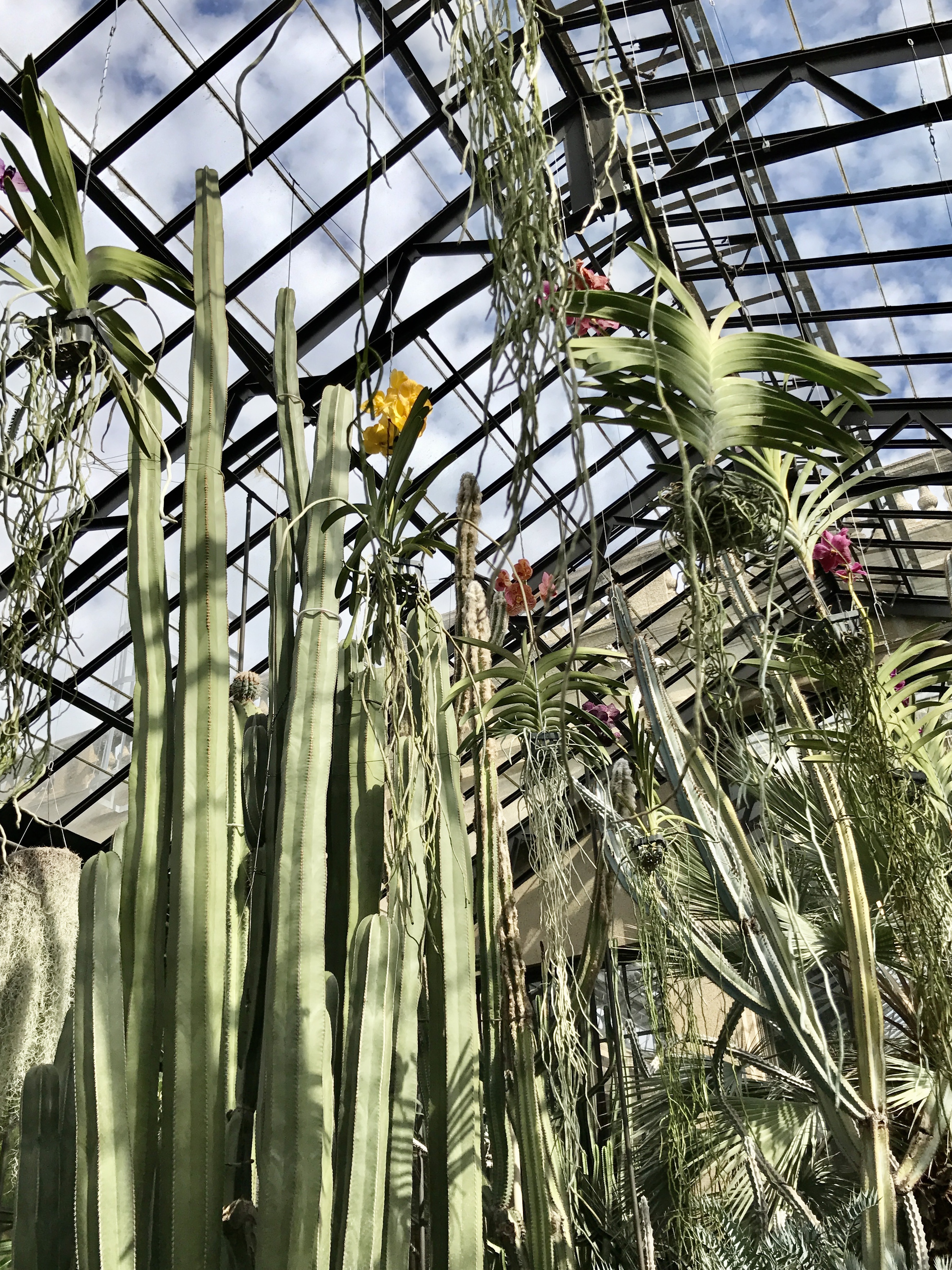
*Imagen: Plantas del Longwood Gardens, PA, 2018. De mi colección personal.
Pre-Prison Writings I (by Jon Beasley-Murray)

Cross-posted from Posthegemony.

Antonio Gramsci’s reputation on the Left, the academic Left at least, is surprisingly solid and enduring, especially when compared to other figures within Western Marxism (Lukács? Adorno? Althusser?) who may once have been much cited but who are now marginal tastes at best. Other names that have similarly withstood the vagaries of time and the fickleness of fashion are perhaps Walter Benjamin and Raymond Williams, and what Gramsci shares with them (Benjamin in particular) is the fact that his writing was quite varied and even fragmentary, permitting a wide range of interpretations and re-readings in different circumstances and for diverse purposes. Indeed, famously this is particularly the case for Gramsci: his most important and influential work by far is the Prison Notebooks, an unfinished textual labyrinth of historical investigation and political creativity produced under the extreme conditions of incarceration and fascist censorship, that was not published until after his death and has still not been fully translated into English. From this cauldron of often ambiguous and sometimes obscure enquiry, many Gramscis or Gramscianisms have subsequently been reconstructed, informing bodies of thought and activism as diverse as the Eurocommunism of the 1970s, Anglo-American Cultural Studies in the 1980s and 1990s, and more recently a “neo-Communism” that pledges, at times more convincingly than others, to employ philological tools to be more faithful to the supposedly systematic character of Gramsci’s original thought. But it is in the nature of the form in which that thought has come down to us that there is much room for dispute and divergence.

gramsci_pre-prison-writingsSome claim, especially in reaction to the version of Gramsci popular in Cultural Studies (for which a term such as “hegemony” can come to mean both everything and nothing), or to his “post-Marxist” appropriation by Ernesto Laclau and Chantal Mouffe, that turning to his pre-prison writings reveals the truer, more pragmatic and political, essence of an unadulterated Gramscianism. And no doubt Gramsci was at vastly more liberty to speak and write his mind before he was arrested and imprisoned by Mussolini’s police and judicial apparatus. Moreover, for the most part these comprise texts that were published, often in venues over which Gramsci had some measure of editorial control, and that as such appeared in something like finished form. It is here that we can read Gramsci the organizer and agitator, the Leninist Gramsci who threw his support behind both the Russian Revolution and the Turin Factory Council movement that sprung up in its wake.

Yet these early texts hardly resolve the Gramscian enigma. For one thing, it is evident that Gramsci’s restless mind was continually developing, experimenting, and trying out new ideas even (perhaps especially) once it was locked up in a prison cell. We have no reason to assume that he thought the same way about things in 1929 as he did in 1919. For another, this corpus is no less fragmentary than the Prison Notebooks, consisting as it does on the whole of short pieces written to a deadline on topical debates for the socialist press. If anything, prison gave Gramsci the freedom to work more consistently and coherently on the key concepts and underlying concerns that mattered to him. Finally, it is not as though censorship and, perhaps above all, self-censorship did not shape and constrain these articles that he knew would see the light of day, by contrast to the long labour of the notebooks that had no immediate audience. After all, throughout this period from 1914 to 1926, Gramsci was quite self-consciously (and unabashedly) engaged in a project of what he himself would call propaganda.

Take for instance Gramsci’s paean to the Bolshevik state, published as “The Price of History” in June 1919. Here he tells us that “The Russian communists are a first-class ruling elite. [. . .] Lenin has revealed himself as the greatest statesman of contemporary Europe [. . .] a man whose vast brain can dominate all those social energies, throughout the world, which can be turned to the benefit of the revolution” (92). Hence “the State formed by the Soviets has become the State of the entire Russian people” thanks to “the assiduous and never-ending work of propaganda, elucidation and education carried out by the exceptional men of the Russian Communist movement, directed by the lucid and unstoppable will of the master of them, Nikolai Lenin” (93-94). In short, “Russia is where history is; Russia is where life is” (95). Yet for all that this article manifests Gramsci’s undoubtedly heartfelt belief in the priority of state-building (“A revolution is a genuine revolution [. . .] only when it is embodied in some kind of State” [92]), one does not have to be an egregiously suspicious reader to wonder whether the hyperbole understandably directed to praise of the leaders of the first successful workers’ revolution might not extend also to the subsequent affirmation that “Society can only exist in the form of a State” (93). What, after all, has happened here to the Gramsci who is famously the champion of organizations of “civil” society, relatively autonomous from or even hostile to the state apparatus?

That other Gramsci, of what we might in shorthand call “society against the state” is indeed visible in these writings. Perhaps most interestingly, he can be found for example in a piece entitled “Socialism and Italy” in which he condemns “liberals, conservatives, clerics, radicals, republicans, nationalists, reformists” (27) as being, precisely, creatures of the state but not of society, or at least not of the Italian nation. Indeed, he offers here a hint of a counter-history of Italian nation formation, not as a process driven by Cavour and the Piedmontese bourgeoisie (who established a relationship to the Italian South that still remained, Gramsci repeats several times, “colonial”), but as the product of Italian socialism: over the course of what he calls a “plebeian Renaissance,” “Italy has become a political unity, because a part of its populace has united around an idea, a single programme. And socialism, socialism alone, was able to provide this idea and this programme” (28, 29). In other words, there is society despite the state, and in the face of the state’s resolute provincialism and particularism. This is “the history of the Italian people [that] has yet to be written–its secret, its spiritual history” (28). And maybe this is the history of the Russian people (and the Russian revolution) that also has yet to be written, even by Gramsci himself.

Again, none of this is to deny the strong statist tendency within Gramsci’s thought. There is no doubt at all that he saw the political objective of the working class movement in terms of the construction of (to borrow the title of the journal he co-founded in 1919) a “new order” premised on a new state guided by the Communist Party that he would also end up co-founding. As he put it even when he was, previously, a member of the Socialist Party of Italy, “The Party is a State in potentia, which is gradually maturing: a rival to the bourgeois State, which is seeking, through its daily struggle with this enemy, and through the development of its own internal dialectic, to create the organs it needs to overcome and absorb its opponent” (4). This is what will later be cast as the struggle for hegemony.

And yet there is also a tension here evident even in the thought of this early, manifestly Leninist, Gramsci. It is a tension perhaps best characterized in terms of two concepts that he continually employs that are both perhaps dissonant to our contemporary ears: “spirit” and “discipline.” As a party man, Gramsci is a great believer in discipline, which is a function of political leadership and education. Italians above all, he tells us in the few pieces that are dedicated to what we would now recognize as “culture” (articles on sport, for instance, and drugs), are a disorderly lot. Their preference for card games, for example, full of “shouting, fists slamming on the table and often in the faces of opponents,” reveals a country that is “backward economically, politically and spiritually” (73, 74). And yet it is precisely this spiritedness that indicates an alternative (and maybe posthegemonic) history, far from the rigidity and farcicalness of the state form. For sure, in Gramsci’s view, these “disorderly and chaotic energies must be given a permanent form and discipline” (97). But without them, without spirit, Italy is nothing.

Fratribus nostris absentibus: sobre la discreción. por Gerardo Muñoz

En una epístola póstuma que consulté hace algunos años en los fondos de Penn State University, fechada en 1989 y dirigida a una comunidad de monjas benedictinas de la abadía de Regina Laudis, el ex-sacerdote Iván Illich avisa de la pérdida del sentido de la caritas ya no solo ante los vivos sino también ante los muertos. Illich le recordaba a la Madre Jerónima que su carta no pretendía establecer un “secreto”, sino un sentido de discreción (discretio); una virtud que la Iglesia había irremediablemente abandonado en su caída al mal.

La discretio – decía Illich siguiendo las recomendaciones de San Benedicto – era la madre de las virtudes, ya que nos hace distinguir la singularidad de cada situación sin que esto suponga una obediencia ciega ante lo predecible. Obviamente, desde la discretio se introducía el problema de la muerte, siempre singular y pasiva, e imposible de homologar a ninguna otra. En realidad, Illich llevaba este procedimiento a un plano experiencial, ya que hablaba de una amiga y de su “final” al que describe como un estado de “inusitada serenidad”.

Illich le decía a las monjas benedictinas: “Lo que quiero compartir con ustedes no es una opinión, sino una angustia que conmemora a los muertos que se escapa del alcance de la forma ordinaria de la caridad”. ¿Pero qué puede significar atender a ese momento oscuro que es sombra de la vida fuera de la vida? Para Illich este era el único momento de una fidelium animae que tanto la medicina como el sistema productivo del Welfare state ya no podían recoger. Desde la experiencia inasible de la muerte de su amiga (quien permanecía innombrable, como toda amistad verdadera), Illich extraía lo que llamó la sistemática “guerra contra la muerte” en Occidente, carente de sentido de “lugar” o de “tierra”. Por eso Illich la describía como una caída hacia la atopia, desentendida del atrium mortis.

Illich se encomendaba al fragmento benedictino: Fratribus nostris absentibus. Pero esa máxima monástica aparecía en un sentido transfigurado; a saber, lo “divino” (como también supo ver Erik Peterson sobre los modos de vestir) es el umbral donde la vida y la muerte se dan en un recorrido ex-corpore. Escribía Illich: “La fe termina cuando la visión de lo eterno está por llegar”. No hay transcendencia ni redención ni salvación compensatoria, solo un sentido especular por lo velado.

¿Por qué recordar todo esto hoy? Porque la crisis pandémica ha puesto de relieve que ninguna de las metrópolis en Occidente y sus guardianes de la “vida” han estado en condiciones de recoger el sentido de Fratribus nostris absentibus. Una década antes, en una serie de conferencias en el Seminario Teológico de Princeton, Illich notó la oscura transformación médica en los Estados Unidos en cuanto al pasaje del “asistir a la muerte” a la administración del “delivery of death“. La “guerra contra la muerte” continua en nuestros días ya sea desde la retórica de la protección de la vida o bien en defensa de la economía. Por eso, hoy más que nunca, la tarea del pensar exige la destitución de lo que llamamos metrópoli.


*Imagen: retrato de Iván Illich de niño en Austria, 1936. Del film “Three Boys House” (1936).

Notes for Gramsci Reading Group Discussion (first 100 pages in Antonio Gramsci’s Pre-Prison Writings.  [Cambridge UP, 1994]).

external-content.duckduckgo

(This is the first posting.  The idea is for some of us to read systematically the Gramscian oeuvre.  Those in the reading group who so desire will post 500-word comments, just notes for discussion, with an aim to accurate understanding, and there might be discussion follow-ups in this space, although we mean to have the primary discussions through Zoom every three weeks or so. We begin with the Pre-Prison Writings, which, we understand, do not necessarily represent the mature Gramsci in every respect.)   

The Hegelian ethical state, accomplished through the bourgeois revolution, is not enough.  We must move towards the construction of an organic state, which only the Party, as the shadow government of the proletariat, can prepare.   It is a matter of culture over economics:  culture enables the proletariat to know itself, that is, to accomplish self-consciousness through the “disciplining of one’s inner self,” through the “mastery of one’s own personality,” through the “attainment of higher awareness” that will lead to understanding the place of the proletariat as universal class in history.  That will naturally determine “our function, rights and duties” (9-10).

History is therefore “the supreme reason” (13).  And history teaches us that the unleashing of productive forces, a “greater productive efficiency” that will eliminate all the “artificial factors that limit productivity” (15), will bring about communism.  It is therefore a matter of “exploiting capital more profitably and using it more effectively” (16).  Yes, towards equality and solidarity, love and compassion (90).  This is the truth of history, and “to tell the truth, to reach the truth together is a revolutionary, communist act” (99).  This will be “the final act, the final event, which subsumes them all, with no trace of privilege and exploitation remaining” (48).

Thinking is being, and being is history.  There is an “identification of philosophy with history” (50).  This is why Marxism is “the advent of intelligence into human history” (56), which is equal to “identifying [historical] necessity with [man’s] own ends” (56).  This is the task of the Party.  “Voluntarism” is the task of the Party, and it is “about the class becoming distinct and individuated, with a political life independent, disciplined, without deviations or hesitations” (57).  Until it can, not conquer the State, but “replace it” (62).

The Party is all, but it is only the vanguard of the all.  “Most people do not exist outside some organization, whether it calls itself the Church or the Party, and morality does not exist without some specific, spontaneous organ within which it is realized.  The bourgeoisie is a moment of chaos not simply where production is concerned, but where the spirit is concerned” (72).

When Gramsci discusses the Italian liberal Constitution existing in 1919 he notes that Italians have been living under a state of exception for several years.  The exception reveals the rule, he says, and the rule is the rule of domination by bourgeois interests as expressed by liberalism.  The situation post-state of exception, in the wake of the Russian Revolution, might enable the unleashing of true history.  “The proletariat is born out of a protest on the part of the historical process against anything which attempts to bog down or to strait-jacket the dynamism of social development” (88-89).

The Party will lead, by submitting to history and its unleashing, the people in order to create, through “ceaseless work of propaganda and persuasion,” an “all-encompassing and highly organized system” (99).  Freedom is party discipline (26).